Filters
Question type

Study Flashcards

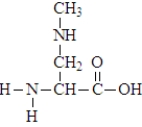
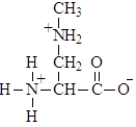
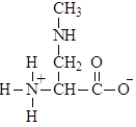
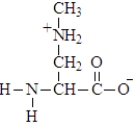
The amino acid shown below maybe associated with ALS (Lou Gehrig's disease) and Parkinson's disease. The amino acid shown below maybe associated with ALS (Lou Gehrig's disease)  and Parkinson's disease.   Which of the following is the zwitterion ion form of the uncommon amino acid? A)    B)    C)    D)   Which of the following is the zwitterion ion form of the uncommon amino acid?


A) The amino acid shown below maybe associated with ALS (Lou Gehrig's disease)  and Parkinson's disease.   Which of the following is the zwitterion ion form of the uncommon amino acid? A)    B)    C)    D)
B) The amino acid shown below maybe associated with ALS (Lou Gehrig's disease)  and Parkinson's disease.   Which of the following is the zwitterion ion form of the uncommon amino acid? A)    B)    C)    D)
C) The amino acid shown below maybe associated with ALS (Lou Gehrig's disease)  and Parkinson's disease.   Which of the following is the zwitterion ion form of the uncommon amino acid? A)    B)    C)    D)
D) The amino acid shown below maybe associated with ALS (Lou Gehrig's disease)  and Parkinson's disease.   Which of the following is the zwitterion ion form of the uncommon amino acid? A)    B)    C)    D)

E) A) and B)
F) None of the above

Correct Answer

verifed

verified

The addition of a 0.10 M solution of Mg(NO3) 2 would most likely affect which type of interaction in the tertiary structure of a protein?


A) hydrogen bonding
B) hydrophobic interactions
C) hydrophilic interactions
D) ion-ion attractions

E) A) and C)
F) B) and C)

Correct Answer

verifed

verified

The following represents the nitrogen cycle. Which of the choices correctly pairs the lettered reactions with the type of organism? The following represents the nitrogen cycle. Which of the choices correctly pairs the lettered reactions with the type of organism?   A) A - bacteriaB - animalsC - plants B) A - plantsB - animalsC - bacteria C) A - plantsB - bacteriaC - animals D) A - animalsB - bacteriaC - plants


A) A - bacteriaB - animalsC - plants
B) A - plantsB - animalsC - bacteria
C) A - plantsB - bacteriaC - animals
D) A - animalsB - bacteriaC - plants

E) C) and D)
F) None of the above

Correct Answer

verifed

verified

Enzymes are sensitive to agitation and will be denatured by violent stirring.

A) True
B) False

Correct Answer

verifed

verified

Showing 61 - 64 of 64

Related Exams

Show Answer